
Every single slot machine, regardless of being found at an online casino or on a casino floor, operates off a random number generator. The random number generator (RNG) is continuously producing random numbers. Once you hit the “spin” button, the outcome of the spin is set. The reels you see spinning on the screen are simply a graphic representation of a decision that has already been made.
What’s significant regarding slot machines is each spin is independent. Each spin cannot influence previous spins. The game doesn’t remember the last spin, nor the last hundred spins; it doesn’t remember that you’ve been feeding the machine for hours. It also doesn’t know that a jackpot hasn’t occurred recently. It also doesn’t know you’re “due.” To verify that licensed games have their RNG tested and verified by third-party testing labs so that regulatory bodies can determine that the RNG produces truly random outcomes and that the overall game pays out what the stated payout rate is.
That One singular point eliminates nearly all slot strategy mythologies at once, and we’ll cover them shortly.
Return to player (RTP) & house edge in plain english
Return to player (RTP), or return to player is essentially the percent of money wagered on a game that it is designed to pay back over a very large period of time. If a slot machine has an RTP of 96%, its house edge is approximately 4%. Most online slots typically range from 94% to 97% RTP, whereas land-based slot machines are extremely variable depending upon jurisdiction, location and/or casino venue, and frequently operate with a lower RTP.
Where people fail is they interpret RTP as a prediction of their session. You could easily play a 97% RTP slot machine and lose 50% of your account in twenty minutes. Conversely, you may play a 92% RTP slot machine and receive a bonus that triples your money. Variance totally overwhelms RTP in the short term. What RTP does indicate is your potential cost of gaming. As an example, if you’re spinning at $1 apiece and playing about 500 spins per hour (a very reasonable assumption with quick spin turned on), you’ve placed a total of $500 in wagers. With an RTP of 96%, your expected loss should be around $20 per hour. With an RTP of 92%, it’s approximately $40 per hour. While RTP is interesting to look at, it will never forecast what happens in your session today.
Volatility determines how you feel
If RTP represents the price tag, then volatility defines the trip. Volatility (or variance) illustrates how a game distributes its rewards. Low-volatility slots pay small wins frequently. High-volatility slots tend to remain silent for extended periods of time, then suddenly provide substantial wins through the occasional activation of a bonus round featuring multipliers.
Hit frequency relates directly to volatility, and thus allows for an assessment of volatility. Hit frequencies for certain games can occur at a ratio as low as one hit in three or four spins. However, many of those “hits” will be much smaller than your original bet. High-volatility games appear to rarely hit, and when they do, the amounts provided are typically token until the feature eventually activates.
Even though two slot machines can be the exact same RTP — e.g., both are 96% — they can seem like two different worlds. One maintains your Bankroll relatively constant, oscillating slightly around your starting balance. The other can rapidly drain your Bankroll for 150-200 spins before either dramatically saving your bacon or doing absolutely nothing. An understanding of this concept forms the foundation for selecting the appropriate slot machine based upon your preferences and goals.
Slot strategy mythology debunked
My intention is to dedicate the majority of this article to explaining how to play smart within this framework. But, i believe it is essential to debunk the myths surrounding slot machines before discussing strategies. Because these myths ultimately lead to players losing money.
“cold” and “hot” slot machines
A hot machine didn’t win lately and therefore isn’t “cold.” Similarly, a cold machine has yet to win lately and therefore isn’t “hot” or “due.” This is simply the gambler’s fallacy dressed in a casino uniform. Past performance provides zero insight into future performance due to the nature of independent spins. I’ve seen players stand behind others at a physical casino waiting for that person to finish and immediately take over their slot machine since it “hasn’t paid all night.” The machine is perfectly good to play…it just has no greater likelihood of winning than the one adjacent to it.
Slamming reels down early
Stopping the reels twice to force them down appears to be a skillful move. It’s not. When you press the “spin,” button the outcome has already been determined. Slamming the reels down merely causes you to see that result sooner.
Using autoplay/quick spin
Neither autoplay nor quick spin affect the probability of winning. Quick spin affects only speed, and speed impacts significantly because quicker spins allow you to place more wagers in an hour, thereby increasing your expected hourly loss. Autoplay doesn’t cheat you. Rather, it makes it easier to blow through your Bankroll without realizing it. Therefore, if you use autoplay, attach a stop-loss to it.
Best time to play slots
As mentioned earlier, there is no particular time-of-day or day-of-week or holiday cycle during which slots pay more. Regulated RNGs are indifferent to whether it’s 3 a.m. On a Tuesday or 7 p.m. On a saturday.
Increasing Max bet improves your odds
On virtually all modern video slots, the RTP is independent of the wager size. Exceptions exist with regard to progressive jackpots. Specifically, many older progressive land-based slot machines require you to play at maximum bet to qualify for the highest possible progressive jackpot. Others apply a multiplier based upon your wager size to your potential jackpot winnings. If you are playing such a progressive for the purpose of potentially hitting the progressive jackpot, please refer to your game’s pay table prior to beginning play. Other than progressive games where wager size applies, betting maximum on any given slot simply increases your hourly loss rate.
Martingale systems/patterns/betting strategies
Doubling-up after losses, betting down after wins, betting up/down after a specific number of losses/wins, etc. — none of these systems/patterns/bet sizes alter the expected value of individual spins. In addition, while each additional spin carries negative expected value, cumulative negative expected value does not equate to positive expected value.
In particular, doubling-up after losses on slots is quite harmful since high-variance slot machines contain lengthy losing streaks and cause your bet size increase exponentially until your eventual win occurs.
Therefore, yes — there is no viable method for predicting outcomes associated with slot machines. Also, yes — over time (months/year) and assuming access to a well-certified/fair slot machine — there is no feasible manner in which players can expect to profit consistently on slot machines with One notable exception associated with certain types of bonuses (that we will discuss later). All subsequent discussion centers around playing slots strategically within this paradigm.
Selecting games
Selecting an appropriate game is your first real opportunity for strategic improvement and most players spend roughly four seconds on this step. Players select games based upon visual appeal of themes or banners indicating “Max win 10,000x.”
Identifying high-RTP games
Most licensed online casinos allow users to view RTP values from within their respective games. Click on an informational button (typically labeled i , ?, or menu icon ) located in the bottom left corner of most screens. The game information panel displays RTP values (as well as volatility values when available) along with complete pay tables.
Important note: many developers create multiple RTP versions for the same title, and operators decide which version(s) they wish to offer. Consequently, while Two games may appear identical (same graphics/animations/etc.), they may display vastly differing RTP rates. The only way to definitively identify RTP values applicable for your actual casino usage is via viewing the information panel in the casino itself (not developer websites).
Whether RTP matters in slots? Virtually not in regards to a single session (but certainly so for longer durations); whether volatility matters more than RTP? While i believe volatility plays more towards how you feel while playing slots; RTP matters more towards how much you’ll spend on slots over longer durations.
Ultimately, you desire both variables aligned with your desired experiences and budgets; however, if I were forced to prioritize them for an evening, I’d say volatility comes first because a misaligned volatility will greatly reduce your session length and enjoyment level; whereas aligning volatility with Bankroll will be critical for ensuring your session duration is optimized.
Do I prefer high or low volatility slots?
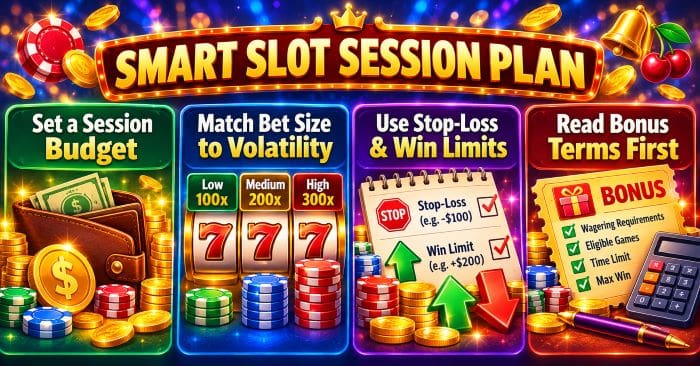
Well…this largely depends on how you plan to utilize your allocated Bankroll for that session. If you have $50 dollars and wish for an entertaining hour-long experience with moderate risk exposure (and assuming you have $50 in Bankroll), then i would strongly suggest avoiding high-risk/volatility slots at $0.50-per-spin stakes as you will likely exhaust your entire Bankroll before experiencing any meaningful returns from the game. Using lower-to-moderate volatility slots at $0.50-per-spin will provide you with substantially improved opportunities for a long entertaining experience. If you have larger-than-average bankrolls ($250+) and wish for big-win potential — and are willing to accept long dry spells — then using high-volatility slots at lower stakes (e.g., $ 0.25 per spin) makes sense…provided you are comfortable accepting that most attempts will result in zero return.

Therefore, rather than asking “which volatility is best?” — perhaps the correct question should be: “what am I attempting to accomplish tonight?”
Choosing slots for long-duration entertainment sessions suggests lower-to-medium volatility along with higher-frequency hit rates; conversely, choosing slots for large-win potential requires accepting higher variability levels along with significantly reduced stake sizes to survive prolonged dry spells.
Read paytables seriously
The pay table provides insight into how the game functions: whether fixed pay lines exist; whether ways-to-win exist; whether Megaways (maximum 117,649 ways) exists; or whether cluster pays exist. The pay table further outlines functionality of wild symbols and scatter symbols; free spins triggering; multiplier application/stacking; maximum winnings.
Additionally, while volatility may not explicitly be outlined in the pay table for many games, observing characteristics outlined above may provide insight into how volatile or nonvolatile a game may function.
Spend two minutes reviewing your intended game’s pay table prior to commencing play, and you will derive far more benefit than any “slot tips” video.
Utilize demo mode before wagering real funds
Many online slots include free-play/demo mode capabilities. Unfortunately, this capability remains grossly underutilized by players. Do not attempt utilizing demo mode for purposes of finding patterns since patterns do not exist; neither will demo mode results forecast anything regarding actual game performance.
Instead utilize demo mode to gain familiarity with how the game performs: hit frequency; time required for bonus triggers; bonus feature performance characteristics; does the base game provide reasonable frequent small wins? Will you actually enjoy playing this title?
While i personally perform 100-200 demo spins prior to allocating funds to any new title i’m evaluating; other players may be satisfied with performing only 10-20 demo spins prior to allocating funds.
Be aware that demo spins represent a very small sample size and therefore should be treated as an “experience-feel-test” rather than as a reliable indicator of true volatility.
Bankroll management: the only slot strategy that actually changes outcomes
Determine session budget prior to depositing funds
Your session Bankroll amount represents how much money you are committed to losing (entirely) during this sitting — not money that you will win-back or recover.
Think of session Bankroll amount as entertainment dollars (the same way you think about tickets/concerts/dinners). If losing this money would impact your rent/groceries/mood for the week — then it is too much!
Quick answers to questions people really ask
Are there any genuine strategies for playing slots?
Yes — but these strategies involve game selection; managing bankrolls; adjusting bet sizes; establishing session limits & bonus conditions — not predicting results. Slot machines are games of pure chance; smart slot playing involves controlling elements that impact outcomes.
Can you beat slot machines?
No — over long-run periods on fair/certified slot titles; house edge will always prevail.
Which matters more: volatility or RTP?
During individual sessions — generally speaking: volatility influences player experience more heavily; during longer durations (over months/year) — RTP has more direct implications upon amount spent.
How much Bankroll should I have available for high-variance slots?
You should aim for having at least 200x – 300x minimum stake size in Bankroll reserves prior to engaging with high-variance slot titles. If this appears too extreme; decrease your bet size instead of decreasing your available Bankroll reserves.
Should I always bet Max on slots?
No — on virtually all modern video-slot titles — RTP does not vary based upon bet size; exceptions exist with regard to progressive jackpots; bet maximum solely where progressive jackpots‘ eligibility is dependent upon wager size — and solely if you possess sufficient Bankroll resources.
Will utilizing demo slots help me develop effective slot strategies?
Demo modes will assist you in understanding rules, features & gameplay dynamics prior to committing funds — demo modes will not enable you to discover patterns — since no pattern exists; nor will demo mode results indicate future results — since no future results exist