
There’s a lot of hype surrounding virtual reality (vr) technology. However, i’ve found that vr technology isn’t yet ready for primetime use. The major issue is that vr technology lacks the overall quality of video game consoles such as sony playstation.
For example, the vr versions of popular video games lack the level of detail and smoothness that gamers expect. Video game consoles typically produce images at resolutions ranging from 1080p to 1440p. Vr technology produces images at resolutions ranging from 720p to 900p. The reduced resolution creates a choppy image that makes playing video games difficult.
Additionally, vr technology requires players to wear a large helmet on their head. The helmets are quite heavy, and they block players’ peripheral vision. These issues combined result in a poor overall experience.
However, my opinion changed recently. I purchased a console-based vr system called the playstation vr. Overall, i’m extremely pleased with the product. The picture quality is excellent, and the level of immersion is unlike anything else available today.
In addition to the quality of the pictures produced by the device, the vr aspect of the product provides an incredibly immersive experience. I’ve played numerous video games through this device and have thoroughly enjoyed each experience.
One thing i didn’t like about the device initially was its cost. However, i believe that the value provided by the device is well worth the initial investment. After purchasing and using this device for a while, i can confidently say that i would recommend this device to anyone interested in experiencing what i refer to as “immersive entertainment.”
This technology has potential uses in the field of education. It has the capability to provide students with interactive experiences that can aid in learning and retention of information. For example, history classes can take students on virtual tours of historical locations; science classes can allow students to interact with molecules and cells; and math classes can help students visualize complex equations and formulas.
Overall, i believe that this type of technology has tremendous potential for educational purposes. It allows for unique learning experiences that cannot be duplicated in a classroom setting. Additionally, it has the ability to increase student engagement and motivation.
While there are many positive aspects to this type of technology, there are also potential negative consequences. One concern is that students will spend excessive amounts of time interacting with these technologies and not complete required coursework.
Another potential concern is that teachers may rely heavily on pre-made programs and not develop original lessons that meet individual student needs.
As with any new technology, there are pros and cons to consider. With careful planning and implementation, however, i truly believe that this technology can greatly enhance the way educators teach and students learn.
It’s funny, but when i first read about vr casinos, i thought they were nothing but gimmicks. How cool would it be to walk into a casino from the comfort of my own living room? Sounds amazing… Until you realize how poorly constructed they were. Poor graphics, clunky controls, and aching necks made me lose interest within 10 minutes.
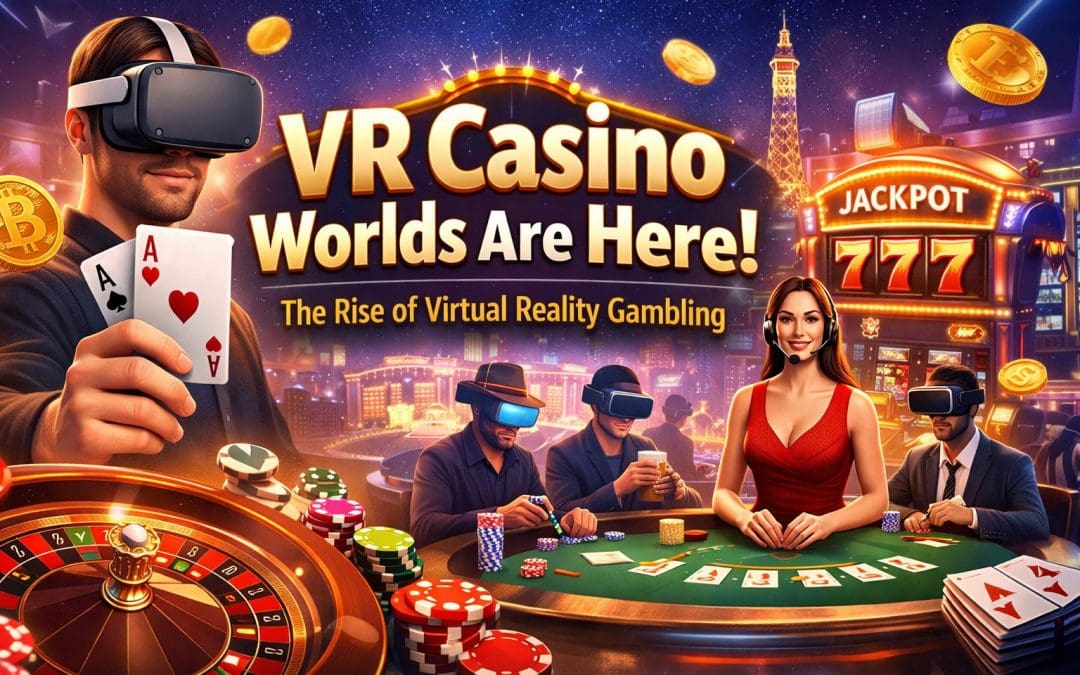
But vr casinos aren’t like that anymore. We’re past gimmicky demos and into full-fledged, functional destinations that are becoming shockingly sticky – especially in select niches. No longer do we see these platforms attempting to merely clone their web lobby counterparts with some extra depth added on top; instead we see immersive casino platforms being crafted to fully leverage the strengths of the vr medium — presence, motion, social interaction, & ritualistic elements that add drama to the act of gambling.
If you follow industry conversations regarding vr casinos, you’ll notice that conversations have shifted dramatically over time. Conversations used to revolve around whether or not vr casinos were technologically feasible. Today our conversations center on which vr casinos are worth your time, which headsets are best for longer gaming sessions, should cryptocurrency be integrated into the platform, & how close we are to creating casino simulation environments that feel superior to simply pointing & clicking at a flat screen.
We’ve entered a completely different realm of the market.
Vr casino maturity wasn’t achieved via a single massive breakthrough. Rather it arrived via multiple incremental advancements reaching fruition simultaneously.
Firstly, headsets have shrunk significantly in size & weight; thereby reducing installation complexity. Secondly, stand-alone headsets such as meta quest have removed most of the friction previously associated with early adoption. Lastly, users no longer require high-end gaming pcs, external sensors, or extensive knowledge of home theatre installations to play a few hands of blackjack. Meta Quest 3, & other similar headsets have greatly expanded accessibility to headset-based casino gaming – especially for hobbyist/curious consumers. Premium offerings such as htc vive continue to cater to users seeking higher end visuals & performance.
Performance is more important than most people realize in regards to virtual reality gaming. Lags in a normal online casino can be frustrating; however, lags in vr can quickly destroy the illusion. Frame rates under approximately 72fps create uncomfortable situations in busy multi-player rooms. Platforms must deliver frames per second consistently above this threshold to remain enjoyable; whereas premium offerings can exceed this number.
Lastly, the social element plays a significant role in virtual reality gaming. Many non-gamers tend to underestimate this factor. Online gambling has always been about more than placing wagers. Atmosphere, ritualism, observing body language, bluffing, performing theatrics for others at the table, etc., have all contributed to making online gambling socially engaging. Flat screen casino applications eliminate much of this social component. Social vr gaming attempts to recreate these factors.
Players sitting in a virtual poker room glancing at avatars of other players & tossing chips into the pot via gesture based input mechanisms create a compelling narrative explaining why players continually return even though the graphics are still improving.
Presence is One of the key reasons why vr slot machines transcend mere novelty items. Players waving their arms at a spinning wheel while listening to the spinning mechanism sounds minor until you experience it yourself.
Vr casinos have successfully transitioned from gimmick-based experiences to something much more interesting: immersive casino platforms leveraging the strength of vr – presence, motion, social interaction & ritualism – to create an environment conducive to social interaction & entertainment.
The conversation around vr casinos has evolved dramatically since the early days of discussion surrounding vr casinos. Initially, the focus centered on determining whether vr casinos were technically viable. Currently, our discussions surround identifying worthwhile vr casinos, evaluating headsets suitable for prolonged gaming sessions & determining whether cryptocurrencies should be incorporated into various platforms. Ultimately, our goal revolves around discovering how close we are to developing vr casino simulation environments superior to flat screens & mouse clicks.
Vr casinos are no longer merely mimicking web-based casino applications with improved graphics; instead we are witnessing the emergence of immersive casino platforms that utilize the strengths of vr to create an authentic experience worthy of consideration by even the most skeptical players.
Ultimately, as we enter a period where skeptics begin admitting the obvious – vr casinos are indeed capable of providing an entertaining experience – we find ourselves transitioning from an era characterized by novelty applications toward a future defined by immersive casino platforms.
Vr casinos have developed rapidly due to broader acceptance of vr technology within society.
Prior to widespread recognition of vr as mainstream consumer technology; development costs associated with immersive 3d casinos prevented many developers from investing resources necessary to develop immersive 3d casinos.
Developers were unwilling to invest large sums of capital into developing immersive 3d casinos due largely to uncertainty surrounding demand for such products.
Widespread acceptance of vr hardware facilitated addressing the classic ‘chicken-and-the-egg’ dilemma inherent in growing any successful market.
More headsets created a greater user-base; therefore creating justification for developers to allocate additional resources toward creation of enhanced software products.
Better software products ultimately served as catalysts encouraging increased utilization of vr headsets by users.
From a purely practical standpoint; many individuals currently gamble online are no longer viewing vr casinos as direct competitors with brick-and-mortar casinos; instead they are directly comparing them with existing online gaming habits: mobile slots after work hours; live dealer blackjack on tablets; sports bets during halftime show; weekend poker sessions.
Therefore online vr betting is not competing against Las Vegas or macau; instead it is competing against existing online gaming habits offering a potentially richer experience without necessitating flight reservations or hotel stays.
This represents a substantially easier sales pitch to secure buy-in for.
Financial barriers represent a primary obstacle preventing many users from accessing virtual reality gaming experiences; therefore affordable headset options represent a significant step toward eliminating this barrier.
Social vr gaming experiences represent a large portion of the growth experienced by virtual reality gaming experiences; users arrive for competitive elements & environment/spectacle/light role-play opportunities.
The distinction between gaming/gambling/social experience becomes blurred rapidly once users transition into virtual reality gaming environments.
Several projects surround metaverse casinos – a term which has been both overused & occasionally valuable – reflect this broader ambition. Remove buzzwords – simply put – persistent virtual spaces where players gather to play/transact/build identity over time. Several of these projects are flimsy while others may be seeking media attention; however the underlying direction represents real potential for virtual reality casinos to represent places (rather than products).
Immersive gameplay significantly alters player behavior
Older online models encourage speed – tab up / deposit / spin / reload / repeat – efficiency is great; however efficiency is often what gamblers don’t want to see in their gaming experience.
One unusual effect on players resulting from virtual reality gaming is that it can make games feel slower than they would typically feel due to increased pacing.
When players must physically look around the room/move between tables/follow chip movement/etc., it creates an event-like experience – much like going out to enjoy a night at a brick-and-mortar casino!
Players talk more amongst themselves and spend longer periods of time in common areas than they normally would. Players also change their game-to-game transition patterns based upon whether or not they will have to perform actions such as moving between rooms or locating chips etc..
Whereas a browser-based gambler might sample ten different titles within twenty minutes a browser-based gambler who spends the same amount of time settling into a table in a believable vr lounge may end up spending that same twenty minutes at One single table because the friction has become part of the fun.
Although there are negative consequences associated with this type of technology (including potential decreases in productivity/increased distractions/auto-catalytic addiction), when immersive casino games strike the right balance – the rewards are obvious. Multi-player black jack games played in a believable vr environment create less focus on rules & more on table energy/vibe/ritualism etc.. Virtual roulette tables become spectator engines – creating communities where players gather around other players & comment on their spins/celebrate wins etc..
Casinos spend millions on lighting/sound design/wallpaper/drinks service/layout design etc… Because they know that gamblers respond well to environmental elements. Finally – vr provides online operators with serious tools to create an environment that gamblers will find engaging enough to stay in for prolonged periods of time
Gesture controls, live dealers, and the return of theater
Much of the excitement surrounding the new generation of technologies used in gambling comes down to one question: can VR restore the human dimension lost by digital gambling?
Gesture controls contribute to answering that question. Not because hand-waving is inherently superior to button-clicking, but because movement provides participation. Anytime you place a bet using physical motion for chips or peer at cards using natural movement creates greater importance around the action. This represents a relatively small psychological adjustment — yet it adds up.
Another obvious bridge between traditional and modern formats is live dealers. We will likely see more hybrid formats where live dealer productions overlap with VR environments in creative ways. Presently, many live dealer games remain primarily flat screen-based, although the potential is apparent. A live-dealer feed sent into a spatial environment which includes AI-assisted moderation and/or real-time translation can create a virtual casino floor atmosphere which is both international and personalized in a manner beyond current standard streams.
AI hosts/assistants in these spaces generate significant buzz — some of it warranted. However, a host which merely recites helpful information in a cheerful tone is unimpressive. On the other hand, a very good guide which can provide explanations regarding table rules, assist in on-boarding, detect suspicious behavior, and recommend rooms based upon individual preferences without interfering with the player’s experience could be quite valuable. The most effective implementations will allow the assistant(s) to remain largely invisible during play.
Augmented reality casino experiences should also be mentioned here although they are not entirely equivalent to full VR
Augmented reality may ultimately prove to be the less-hyped victor in some areas since ar combines layers of gambling with the player’s existing environment rather than substituting it. Consider a poker table super-imposed onto your living room, cards and chips anchored in space and friends appearing as avatars sitting in vacant chairs. Such an arrangement could have appeal for individuals who perceive full-headsets as isolating or fatiguing.
The blockchain angle is real – however it requires a reality check
No discussion of blockchain-based VR casino experiences would be complete without acknowledging how fragmented this area remains.
From an abstract perspective the relationship appears natural. Virtual worlds appear designed for digital assets. Crypto-payments enabled VR casinos can facilitate faster deposits, global accessibility and programmable systems for tracking ownership or rewarding players. Communities centered around ethereum gambling have adopted the concept that casinos located within virtual spaces should be capable of processing digital wallets as effortlessly as websites process credit cards.
There are genuine benefits to this approach. Global users often require flexible payment options. Certain players appreciate the anonymity provided by crypto-transactions. Operators enjoy branding opportunities and alignment with broader Web3 ecosystems. In theory blockchain-enabled records can provide additional levels of transparency regarding specific game mechanics or payout structures.
However theory does not equate practice
User experience still has rough spots in much of the space
Wallet connections often confound ordinary players. Fees associated with transactions can surge. Regulated treatment varies greatly. Additionally many so-called blockchain-casinos are far better at marketing than producing products. Simply slapping token-language onto a mediocre VR room does not constitute development toward the future.
The more reasonable viewpoint is that blockchain will likely function as an infrastructure layer in parts of virtual reality casino platforms rather than being the whole identity
To the average user, the best payment rails are those that work seamlessly and engender trust. If crypto facilitates that type of user-experience — wonderful! If adding cryptocurrency introduces additional complexity — players will ignore it.
What 2026 really shows us
The big trends surrounding next gen VR gambling are less flashy than the press cycle makes them sound
Market development through practical improvements rather than cinematic breakthroughs
Visuals have improved — but that alone will never matter
Stability social density ease-of-use represent greater concerns to players than cartoonish avatars long before they will accept crashing lagginess or empty rooms.
Platform identity is becoming clearer too.
Certain brands are focusing on traditional-rm-gambling other brands are focused on creating social-VR gaming with casino themes lighter stakes community features etc… the split represents a healthy trend since it prevents allowing the category from pretending every virtual gaming environment possesses the same audience / legal posture.
Crossover between mobile & desktop apps are quiet trends too.
Not everyone will spend every session inside a headset.
Many users will switch between flat screen account management phone notifications immersive play sessions based upon mood context etc…
Successful operators are designing for these types of mixed behavior instead of forcing a pure-virtual-lifestyle which most people will never adopt.
And then there is realism.
Oddly enough total realism is not always the goal.
one of the most enjoyable VR casino spaces are stylized playful slightly over-the-top.
They understand that the magic comes from coherence — not photorealistic furniture.
A believable atmosphere beats perfect simulation every time.
Friction points no one should ignore
Despite momentum this sector still has serious weaknesses.
Comfort is one example
Even with improved hardware — longer sessions remain fatiguing. Heat buildup lens fog motion sensitivity headset pressure — these issues do not solve themselves for everybody.
Casino operators want you relaxed.
Headset discomfort can quickly undercut that feeling.
Moderation is another problem area
Voice chat & avatar presence make social VR gaming very lively — however they invite harassment griefing general chaos if proper moderation isn’t implemented within the platform.
In a poker room table talk can create fun — it can also become messy if boundaries are poorly established.
Regulatory treatment may prove to be the largest wildcard
Virtual reality gambling occupies the intersection of gaming law online betting laws digital payments age verification platform governance.
Jurisdictional variations exist around speed — operators who rush into markets without clean compliance tend to cause problems later-on down the road.
There is also the question regarding user base size
VR casinos are real now yes… But “real” doesn’t automatically mean mass market
Plenty of players remains completely happy with regular casino applications sports book sites live dealer streams etc…
VR does not need to replace those formats to be successful… It only needs to establish a durable lane within the broader market.
Where this is heading next
The future of VR casinos probably looks less like a single large virtual Strip and more like a patchwork of specialized experiences.
Some areas will focus on poker because social conflict translates well into VR.
Other areas will lean toward slots where spectacle theme and environments provide significant value.
Hybrid lounges which combine games entertainment sports viewing and light betting in a single social world will also exist.
A few metaverse casinos will continue chasing their dream of persistent virtual nightlife complete with avatar fashion loyalty programs branded events tokenized rewards etc… Most of those won’t develop into iconic destinations – but several could develop dedicated communities.
The larger potentially more important shift is demographic
Digital natives already feel comfortable treating virtual spaces as legitimate places to hang out spend money define themselves.